Victory Shopify Theme Review: Conversion-Driven Layouts Built for Campaign Commerce
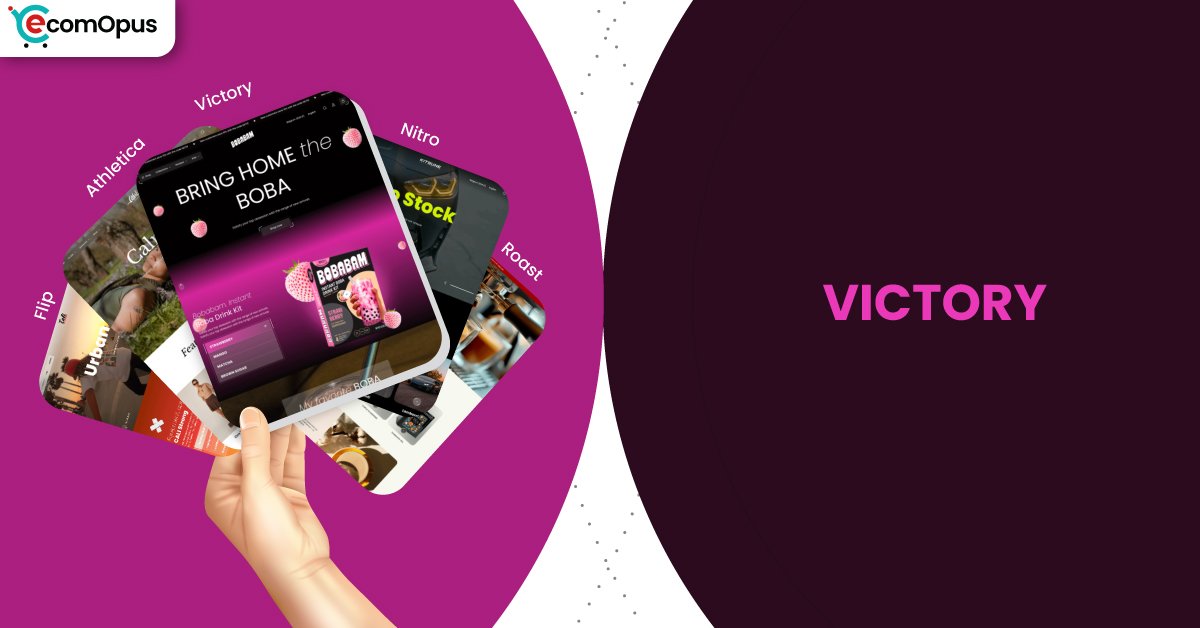
Victory is designed for merchants who sell through visibility, momentum, and well-timed persuasion. It combines bold merchandising blocks with practical conversion mechanics that support active selling rather than passive browsing.
- High-impact sections for promotional storefronts
- Conversion-focused layout across all templates
- Strong cart and upsell mechanics built-in
- Designed for campaign-heavy product catalogs
- Clear hierarchy for fast shopper decisions
- Flexible structure without custom development

Introduction
Victory Shopify Theme is the flagship preset within the Victory theme family, and it sets the tone for how the entire system approaches selling. The layout prioritizes visibility and momentum, ensuring that products, offers, and calls to action are never buried beneath excessive storytelling. Instead of asking shoppers to explore slowly, Victory guides them forward with confident visual cues and predictable interaction patterns.
Team eComOpus evaluated Victory by building a promotion-led demo store with rotating offers, bundled products, and multiple entry points into the cart. The theme feels engineered for merchants who plan campaigns in advance and want the storefront to keep up. Sections stack easily, but the design stays coherent when hierarchy is respected. One early merchant described it as having “many customizable features,” which reflects how much control exists without forcing custom code.
Ideal For Niches With Supporting Features
Victory works best for stores where purchase decisions are encouraged through visibility, urgency, and well-placed reassurance. Rather than relying on deep narrative, it supports shoppers who browse with intent and respond to clear incentives. We mapped niches to the features that do the heavy lifting in those buying journeys. This table helps validate whether your catalog aligns with that behavior before committing to the theme.
| Niches | Supporting Features | Why They Matter? |
|---|---|---|
| Food and beverage | Promo banners, bundles, quick buy | Shoppers decide quickly when offers are clear. Built-in bundles lift order value without slowing checkout. |
| Coffee and consumables | Subscription cues, stock indicators | Repeat buyers respond to visibility and reminders. Clear signals reduce hesitation and increase retention. |
| Beauty and wellness | Trust badges, structured product tabs | Buyers need reassurance before committing. Organized details build confidence without overwhelming. |
| Apparel and accessories | Collection quick add, variant swatches | Speed matters when comparing styles. Quick add keeps shoppers moving through collections. |
| Seasonal and gifting brands | Timers, campaign sections, cart upsells | Time-bound offers work best when urgency is visible. Upsells near checkout feel natural. |
| Mid-sized retail catalogs | Mega menus, recommendations | Discovery must stay fast as SKUs grow. Navigation clarity prevents early drop-offs. |
Presets
Presets in Victory influence how aggressively the storefront pushes action. The Victory preset itself sits at the center of the spectrum, balancing promotion density with usability. Understanding how it compares to sibling presets helps merchants choose the right default behavior before building content. The table below frames each preset by selling rhythm rather than appearance.
| Preset | Aesthetic Vibe | Where It Shines | Noteable Tweaks |
|---|---|---|---|
| Victory | Bold and conversion-led | Campaign-driven stores | Dense promo tools and upsell focus |
| Flip | Flexible and balanced | General merchandising | Adaptable sections and layouts |
| Nitro | Minimal and fast | Large inventories | Tight grids and speed-first flow |
| Athletica | Energetic and structured | Activewear brands | Dynamic visuals with order |
| Roast | Calm and editorial | Story-led commerce | Spacious layouts and pacing |
Key Features And Highlights
Victory’s feature set is built around reducing reliance on third-party conversion apps. Instead of adding tools later, many selling mechanics are already embedded into the theme structure. We evaluated features by how often they influence real purchase moments, not how impressive they look in a demo. Each item below explains what it does and why it matters in daily store operations.
| Features | What It Is And Why It Matters? |
|---|---|
| Slide-out cart system | The cart drawer confirms actions without page reloads. This keeps momentum high and reduces abandonment during add-on decisions. |
| Built-in upsells | Product recommendations appear at natural decision points. Upsells feel integrated rather than forced or disruptive. |
| Quick buy on collections | Shoppers can add products directly from listing pages. This shortens the path to checkout, especially on mobile. |
| Campaign-ready promo blocks | Banners, tiles, and popups share consistent styling. Merchants can run overlapping campaigns without visual chaos. |
| Structured product templates | Tabs and sections organize complex product information. Buyers find answers faster, which improves conversion confidence. |
| Navigation optimized for scale | Mega menus and featured links guide discovery. Large catalogs stay browsable without confusion. |
| Stock and urgency indicators | Inventory cues create subtle pressure. Shoppers understand availability without aggressive messaging. |
| Trust and reassurance areas | Shipping, returns, and guarantees are visible but restrained. This reduces checkout hesitation quietly. |
| Mobile-first interaction patterns | Touch targets and spacing are designed for thumbs. Fewer mis-taps improve session quality. |
| App-light design philosophy | Many conversion tools are native. Fewer external scripts help maintain performance stability. |
Theme Experience!
Victory’s experience is defined by forward motion. We tested the theme by navigating as a shopper during promotions, then revisiting as a merchant making frequent updates. The experience remains predictable even as content changes. The table below outlines how shoppers are likely to feel at each stage of the journey.
| Experience Area | What Shoppers Feel In Practice? |
|---|---|
| First impression | The store feels active and purposeful. Shoppers immediately see offers and featured products. |
| Collection browsing | Product grids encourage fast scanning. Visual hierarchy makes priorities clear. |
| Product engagement | Details appear in a logical order. Shoppers move from interest to decision without friction. |
| Promotion awareness | Offers are visible throughout the journey. Shoppers rarely miss key incentives. |
| Cart progression | Cart interactions feel immediate. Add-ons appear without slowing checkout intent. |
| Mobile usability | Navigation stays readable even with promotions enabled. Browsing feels controlled. |
| Repeat visits | Familiar layout speeds return purchases. Shoppers know where to find deals quickly. |
Performance, Explained!
Victory Shopify Theme shows a performance profile shaped by its conversion focus. Desktop performance is strong and responsive, supporting fast browsing and cart interactions. Mobile performance remains stable but shows sensitivity around interaction responsiveness, especially when multiple promotional elements and scripts are active. Core Web Vitals indicate that layout stability is generally solid, while interaction delays are the primary area to manage.
In practice, Victory performs best when merchants treat promotions and apps as a budget. The theme itself does not rely on heavy animation, but stacked banners, popups, and third-party widgets can affect mobile INP. Desktop experiences feel fluid, making the theme well-suited for desktop-heavy traffic and paid campaign landings.
| Performance Parameters | Mobile | Desktop | Remarks |
|---|---|---|---|
| Performance Score | 74/100 | 91/100 | Mobile performance is usable but sensitive to scripts. Desktop browsing feels smooth and reliable. |
| First Contentful Paint | 1.7 s | 0.9 s | Content appears early, reducing bounce from ads. Desktop paint supports fast visual confirmation. |
| Largest Contentful Paint | 2.4 s | 1.4 s | Main visuals load within healthy ranges. Image discipline improves consistency. |
| Cumulative Layout Shift (CLS) | 0.00 | 0.12 | Mobile stability is strong. Desktop shifts suggest late-loading assets that can be refined. |
| Interaction responsiveness | 210 ms (INP) | 102 ms (INP) | Mobile taps may feel delayed with stacked promos. Desktop interactions remain crisp. |
| Time to First Byte (TTFB) | 1.1 s | 0.1 s | Desktop response is strong. Mobile varies by network and hosting. |
| Time to Interactive (TTI) | App dependent | App dependent | Interaction improves when nonessential scripts are deferred. Clean builds feel usable faster. |
| Speed Index | Media dependent | Media dependent | Perceived speed improves with optimized hero imagery and fewer overlays. |
From our testing, Athletica performs like a well-built training plan: strong fundamentals, but outcomes depend on what you add on top. If your store runs multiple scripts for reviews, upsells, and popups, mobile responsiveness is where you will feel it first. The good news is that Athletica does not force heavy visual effects to look modern, so optimization does not require sacrificing design. Keep imagery lean, keep apps purposeful, and the preset rewards you with a storefront that feels quick and stable.
Pricing
Victory Shopify Theme is priced at $320 as a one-time purchase per storefront license. This includes ongoing updates delivered through the Shopify Theme Store. The value proposition improves when built-in conversion tools replace multiple paid apps. Merchants who run frequent campaigns or seasonal launches typically recover the cost faster. Stores with static catalogs may still benefit, but the return depends on how actively the promotional features are used.
Stores Build with Victory Shopify Theme
Victory is still relatively new in the Shopify Theme Store, and publicly verifiable live examples remain limited. Team eComOpus avoids speculative listings to maintain accuracy and trust. As adoption grows and more storefronts launch, this section will be updated with confirmed examples that demonstrate real-world execution.
Themes Similar to Victory
Victory belongs to a category of themes focused on active selling rather than minimalist presentation. We selected comparable themes that emphasize promotions, discovery, and conversion support. This table helps clarify where Victory fits among alternatives.
| Shopify Theme | FREE or Paid? | Why is it Similar? |
|---|---|---|
| Impulse | Paid | Designed for promotion-heavy stores. Strong focus on upsells and campaign visibility. |
| Prestige | Paid | Premium presentation with built-in merchandising tools. Less aggressive than Victory. |
| Horizon | FREE | Modern structure with flexible sections. Requires more setup for conversion focus. |
| District | Paid | Practical for mid-sized catalogs. Victory offers stronger built-in promo mechanics. |
| Dawn | FREE | Clean foundation with fewer selling tools. Victory adds urgency and cart features. |
Pros and Cons
These points reflect day-to-day use rather than theoretical capability. Pros outweigh cons when Victory is matched with the right selling strategy.
| Pros | Cons |
|---|---|
| Built-in upsells reduce app reliance. Checkout flow stays focused. | Mobile interaction slows with heavy promo stacking. |
| Campaign sections are flexible and consistent. Updates remain fast. | Requires hierarchy discipline. Overuse creates clutter. |
| Cart and quick buy improve conversion momentum. Shoppers move faster. | Desktop CLS may need tuning. Late assets cause shifts. |
| Navigation scales well with growing catalogs. Discovery stays clear. | |
| Trust elements reduce hesitation without noise. Buying feels confident. |
Our Rating
Ratings reflect how Victory performs over time in real merchant workflows. We considered setup effort, conversion impact, and performance stability after promotions are enabled. The table below explains how each score was reached.
| Parameters | Our Ratings | Summary |
|---|---|---|
| Feature Depth | 4.6/5.0 | Extensive built-in selling tools reduce app dependence. Merchandising feels intentional. |
| Design and Customization | 4.4/5.0 | Sections are flexible but expect disciplined hierarchy. Results improve with planning. |
| Performance | 4.0/5.0 | Desktop performance is strong. Mobile requires restraint with scripts and media. |
| Value for Money | 4.3/5.0 | One-time pricing pays off for campaign-driven stores. App savings improve ROI. |
| Support and Updates | 4.3/5.0 | Early feedback suggests responsive support and ongoing improvements. |
| Overall | 4.4/5.0 | Victory is a strong choice for active selling. Best when promotions drive strategy. |
User Reviews: What Merchants Say
Merchant feedback is still limited but positive. One early review mentioned “Many customizable features, great customer service as well,” which aligns with our setup experience. The theme offers control without forcing complexity.
Designer responses emphasize continuous development and best practices, suggesting the product is actively maintained. That matters for feature-rich themes, where refinement often determines long-term satisfaction.
So far, feedback suggests merchants succeed most when they plan promotions carefully instead of enabling every option at once. Purposeful configuration leads to smoother performance and clearer storefronts.
Our Verdict
Victory Shopify Theme is built for merchants who sell through campaigns, bundles, and visibility. It provides a conversion-focused toolkit that reduces reliance on third-party apps while keeping the storefront dynamic.
At $320, Victory delivers value when used actively. Merchants who plan promotions, optimize media, and keep scripts lean will find it a powerful foundation for growth-oriented stores.
Who Should Not Buy Victory
Victory is not ideal for brands seeking minimalist presentation or slow, editorial browsing. The theme assumes active selling and visible incentives.
Stores with very heavy app stacks or limited promotional planning may struggle to keep mobile interactions smooth. If your strategy relies on calm storytelling rather than momentum, a different preset within the Victory family may be a better fit.
GET THE BEST APPS IN YOUR INBOX
Don't worry we don't spam