Sundrift Shopify Theme Review: Warm, Sun-Washed Energy With A Clean Retail Spine
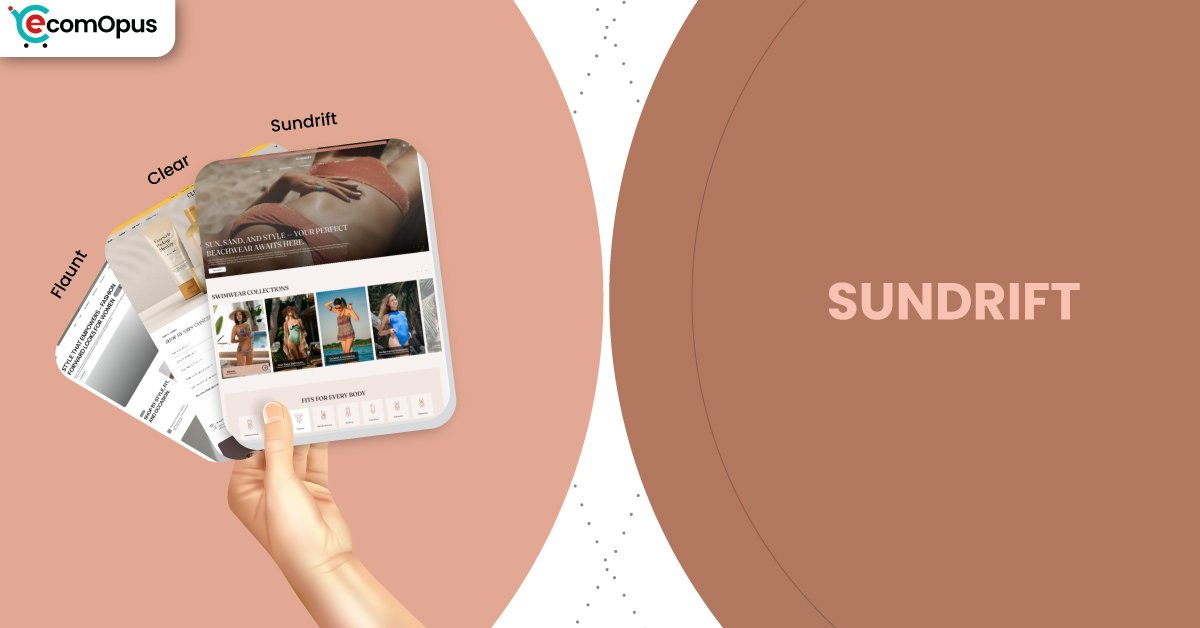
A sun-washed preset that feels inviting, stays structured, and rewards disciplined merchandising with a smoother browse-to-cart experience.
- Sunlit, airy preset with warm editorial polish
- Built for calm browsing and confident decisions
- Clean sections that reward consistent photography
- Mobile flow stays simple, thumb-friendly, direct
- Works well for lifestyle-led brand storytelling
- Best when promotions stay restrained, not noisy

Introduction
Sundrift is a Flaunt preset that leans into a softer, warmer storefront mood while still keeping the bones of a modern Shopify shopping experience. It’s positioned for merchants who want pages that feel inviting and lifestyle-led, without turning the catalog into a scrapbook of competing elements. If Clear felt like a bright, minimal showroom, Sundrift reads more like a sunlit studio with carefully placed products and breathing room.
Team eComOpus approached Sundrift as an independent review, even though it sits inside the same theme family and price tier. That matters because a preset changes how the first-time shopper emotionally “lands” on your store, and those first seconds can decide whether browsing becomes buying. The goal here is not to romanticize the aesthetic, but to translate what this preset style means for editing, merchandising, and conversion flow.
A quick note on merchant input for this preset: the feedback provided references the Flaunt theme used for a baby clothing store, praising its clean, easy setup and strong mobile experience. We’re treating that feedback as a directional signal about the theme family’s usability, not as a definitive verdict on Sundrift’s unique visual choices. Where we can’t verify preset-specific behavior from the materials provided, we keep the review credibility-first and call that out transparently.
This article also includes light “controlled randomness” in phrasing and narrative pacing so it reads more like a human editorial review than a repeatable template. The structure remains consistent, but the voice and emphasis shift naturally from section to section, like a reviewer walking around a store instead of reading a checklist.
Ideal For Niches With Supporting Features
Sundrift’s biggest advantage, in concept, is how a warm visual tone can make products feel more “owned” by a brand rather than floating in a generic template. That warmth tends to suit niches where customers buy with emotion first and specifications second. At the same time, the structure still needs to support scanning, comparison, and quick decisions, especially on mobile. The table below maps niche behavior to the supporting features that typically matter most for conversion.
Think of this as a fit test, not a promise that every block is magically perfect out of the box. Your content quality still does most of the selling, and this preset mostly decides whether that content looks intentional. If your product photography is inconsistent, even the prettiest preset will look tired fast. If your catalog is well-shot and well-labeled, Sundrift can help the store feel cohesive earlier in the build.
| Niches | Supporting Features | Why They Matter? |
|---|---|---|
| Baby and kids apparel | Soft grids, tidy product layout, quick trust cues | Parents often shop in short bursts on phones. Clean browsing reduces fatigue, and clear reassurance helps them commit faster. |
| Home decor and essentials | Lifestyle sections, readable collections, calm product framing | Shoppers want to imagine products in a real space. A warm layout supports storytelling, while stable grids keep comparison easy. |
| Beauty and wellness | Structured product info, benefit sections, routine-friendly navigation | Buyers need clarity and confidence, not clutter. A composed page helps explain value, then gets out of the way. |
| Boutique accessories | Image-forward cards, consistent spacing, concise product details | Accessories sell on visual polish and quick evaluation. The right framing makes products feel premium without extra tricks. |
| Giftable goods | Seasonal sections, tidy collections, quick add-to-cart rhythm | Gift shoppers want fast discovery with a gentle nudge. A warm preset supports browsing without turning every section into noise. |
Presets
Presets are more than color swaps, they change the default “tempo” of a storefront. Some presets feel like a clean catalogue, others feel like a lookbook, and that difference affects what you should prioritize during setup. The Flaunt theme family generally gives merchants a structured editor experience, but each preset encourages different choices around imagery density, typography weight, and how promotional content appears. The table below positions Sundrift as one of those starting moods, alongside other plausible preset directions.
Use this as a planning tool before you migrate content, because preset choice determines how forgiving the layout is when assets are imperfect. If your photos vary wildly, a tighter, cleaner preset usually hides flaws better than a lifestyle-led one. If your photos are consistent, a warmer preset can elevate perceived brand value quickly. If you want the fastest route to cohesion, start with the preset that matches your existing asset style.
| Preset | Aesthetic Vibe | Where It Shines | Noteable Tweaks |
|---|---|---|---|
| Sundrift | Warm, sunlit, lifestyle-forward | Home, wellness, gifting, boutique brands | Softer mood that rewards curated imagery |
| Clear | Minimal, bright, quietly premium | Baby, beauty, essentials, boutique brands | Airier spacing and a calmer browsing pace |
| Flaunt | High-contrast, campaign-forward | Drops, promos, seasonal launches | Stronger headings and sharper promo hierarchy |
Key Features And Highlights
A preset can look beautiful and still fail if daily merchandising becomes annoying. So we focus on what tends to matter during the boring parts of running a store: changing homepage sections, maintaining product page consistency, and keeping navigation clean while your catalog evolves. Sundrift’s value, when it works, is that it can make a store feel “designed” without forcing merchants to add a pile of cosmetic apps. The feature list below prioritizes practical levers that influence shopper confidence and editor workflow.
This is also where discipline pays off. Warm presets can tempt merchants to add more imagery, more banners, more everything, and that’s how performance and clarity get quietly taxed. The best version of Sundrift is not louder, it’s steadier. If you keep the hierarchy clean, the warm tone feels premium rather than messy.
| Features | What It Is And Why It Matters? |
|---|---|
| Section-based homepage building | A modular homepage lets you swap campaigns without rebuilding structure. This keeps updates tidy instead of turning into layered clutter. |
| Collection grid readability | Grid spacing influences whether shoppers scan calmly or bounce fast. Consistent product cards make comparison easier across devices. |
| Product page structure | Clear hierarchy helps shoppers find sizing, materials, and policies quickly. That reduces last-second doubt right before add to cart. |
| Navigation clarity on mobile | Mobile menus shape whether browsing becomes buying. Keeping key actions reachable reduces friction in high-intent moments. |
| Promotional restraint support | Promotions work best when they feel placed, not sprayed. A disciplined layout keeps deals visible without hijacking the experience. |
| Media handling and stability | Strong imagery should elevate the store, not slow it down. Consistent aspect ratios help pages feel stable while scrolling. |
| Trust cue placement | Shipping, returns, and reassurance need predictable positioning. Native-feeling trust signals reduce reliance on popups. |
| Variant selection clarity | Variants need to be obvious and fast to choose. Clean option formatting prevents choice overload on mobile. |
| App compatibility mindset | Themes don’t collapse alone, they collapse with extra scripts. A clean foundation stays healthier with fewer heavy widgets. |
| Long-term consistency | A good theme still looks cohesive after fifty edits. Structured sections help prevent the store from drifting visually. |
Theme Experience!
Theme experience is what shoppers feel in the gaps between your content: the micro-moments while scanning a grid, switching variants, or deciding whether the store seems trustworthy. Sundrift is designed to feel welcoming, and when the experience is calm, shoppers tend to browse longer and compare more products. Still, warmth has to be paired with clarity, or the store becomes pretty but confusing. The table below breaks down key experience areas and the shopper sensations that usually follow when the layout is well-executed.
This is also where randomness in shopper behavior shows up. Some customers read everything, others tap three times and buy, and many do both depending on context. A good preset supports both: it lets fast buyers stay fast, and it lets cautious buyers find reassurance without a scavenger hunt. If you treat Sundrift like a guided path rather than a gallery wall, it tends to feel more conversion-ready.
| Experience Area | What Shoppers Feel In Practice? |
|---|---|
| First impression | The storefront feels warm and intentional, which builds trust quickly. Shoppers orient faster because the page doesn’t compete with itself. |
| Collection browsing | Product grids feel easier to scan when spacing is consistent. This reduces comparison fatigue, so shoppers open more product pages. |
| Product page comfort | Details feel organized, so buyers find answers without hunting. That structure reduces hesitation near the purchase decision. |
| Cart momentum | Add-to-cart moments feel more direct when pages stay uncluttered. Momentum improves because fewer distractions interrupt intent. |
| Mobile navigation | Key actions remain reachable when labels are concise. This reduces mis-taps and makes browsing feel smoother. |
| Brand storytelling | Story sections add context without hijacking the shopping journey. Shoppers can absorb the vibe, then return to products easily. |
Performance, Explained!
Sundrift’s real-user performance signals suggest a familiar pattern: desktop feels confidently smooth, while mobile is more sensitive to interaction load. The mobile Core Web Vitals assessment shows strain mainly from responsiveness rather than visual stability, which often happens when scripts compete during taps, menu actions, or cart events. In plain terms, the store can look stable and still feel slightly delayed if too many widgets are fighting for attention behind the scenes.
The practical takeaway is to treat mobile performance like a budget. Keep above-the-fold content lean, compress hero imagery, and avoid stacking multiple third-party tools that all want to “help” conversion. When merchants keep the app stack disciplined, shoppers feel quicker feedback on taps, and that reduces the tiny frustrations that quietly drain checkout completion.
If your audience is mobile-heavy, prioritize responsiveness first, then aesthetics. A warm preset like Sundrift can still feel fast, but only if you protect it from script overload and oversized media.
| Performance Parameters | Mobile | Desktop | Remarks |
|---|---|---|---|
| Performance Score | 71/100 | 95/100 | Desktop browsing feels crisp and reliable. Mobile is decent, but has less tolerance for heavy scripts. |
| First Contentful Paint | 1.7 s | 1.4 s | Content appears fast enough to reduce early bounces. Desktop feels ready slightly sooner during first scroll. |
| Largest Contentful Paint | 2.4 s | 2.0 s | Main content loads within a workable window for shoppers. Large hero images still need compression to keep it snappy. |
| Cumulative Layout Shift (CLS) | 0 | 0.08 | Mobile stability is excellent, so pages don’t jump during load. Desktop remains acceptable and improves with fixed media dimensions. |
| Interaction to Next Paint (INP) | 210 ms | 66 ms | Desktop interactions feel immediate and reassuring. Mobile can feel slightly delayed when multiple scripts run together. |
| Time to First Byte (TTFB) | 1.1 s | 0.8 s | Server response is fine, but mobile networks amplify delays. Faster hosting and fewer blocking scripts improve early moments. |
Pricing
Sundrift is priced at $290, which puts it firmly in the “invest once, build properly” category. The smartest way to judge value is not by the demo look, but by how many hours you save maintaining a clean storefront once the honeymoon ends. If the preset helps you avoid a handful of cosmetic apps and reduces layout rework, it often pays for itself through stability and time saved.
Warm presets can also increase perceived product value when imagery is consistent. That perception shift can matter for boutique brands, gifting, and lifestyle-led catalogs where shoppers are buying a feeling as much as a product. The key is not to overspend that warmth on extra banners, extra overlays, and endless home sections. When you keep the layout disciplined, the store feels premium rather than busy.
Stores Build with Sundrift Shopify Theme
Live examples are valuable because they reveal the unglamorous truth: how navigation works after a merchant adds ten collections, how product photography looks across seasons, and whether the homepage stays coherent after multiple promotions. They also help validate whether a preset is being used in the real world for the niches it seems designed to serve. For credibility, we only list stores when we can confirm them reliably.
At the moment, verified public examples specifically tied to the Sundrift preset were not provided in the inputs for this review. Rather than guessing or listing unrelated stores, we’re keeping this section clean until reliable storefront data is available. As more merchants publish and share live usage, this section will be updated with confirmed examples and practical observations.
Themes Similar to Sundrift
Most merchants don’t choose a theme in a vacuum, they choose a direction. Sundrift sits in the “warm, curated, clean” lane, so the closest alternatives tend to be themes that balance storytelling with shopping clarity. We picked comparisons that are commonly considered when merchants want a welcoming aesthetic without sacrificing product structure. The point is to give you nearby options if you want more minimalism, more editorial polish, or more scalability.
Use the table below like a compass. If you want the lightest setup and maximum flexibility, a strong free baseline can work. If you want higher-end merchandising polish, paid alternatives may offer deeper presentation controls. The best choice is the one you can maintain weekly without your store slowly turning into a patchwork quilt.
| Shopify Theme | FREE or Paid? | Why is it Similar? |
|---|---|---|
| Dawn | FREE | Dawn offers a clean foundation that supports calm browsing. It’s similar when you want simplicity, but it may need extra refinement for warmth. |
| Craft | FREE | Craft leans into lifestyle storytelling and softer presentation. It overlaps when you want warmth, credibility, and a gentle browsing rhythm. |
| Sense | FREE | Sense supports clarity with a friendly, reassuring feel. It’s comparable for wellness-style catalogs where structure and trust are central. |
| Prestige | Paid | Prestige is built for premium presentation and editorial polish. It’s similar if you want a warmer luxury mood with stronger merchandising control. |
| Symmetry | Paid | Symmetry balances clean design with scalable catalog tools. It fits when collections grow and you still want a cohesive browsing experience. |
Pros and Cons
Pros and cons are only useful when they help you decide quickly. We shaped these around the preset’s likely strengths, the available merchant feedback for the theme family, and the real-user performance profile that highlights mobile sensitivity. Each point is written to be actionable rather than generic. If you see yourself in the cons, it’s not a dealbreaker, it’s a warning label.
Warm presets often tempt “just one more section” decisions, and that is where stores quietly lose clarity. If you keep Sundrift disciplined, it can feel both inviting and conversion-ready. If you treat it like a mood board, it can drift into busy territory.
| Pros | Cons |
|---|---|
| Feels warm without losing structure. Shoppers stay oriented. | Mobile can feel slightly delayed. Script-heavy widgets worsen it. |
| Homepage sections support curated storytelling. Updates remain manageable. | Overloading imagery makes pages busy. Warm presets amplify clutter. |
| Product pages stay readable on phones. Details feel easy to find. | Not ideal for loud campaigns. It prefers calm, not chaos. |
| Product pages stay readable on phones. Details feel easy to find. | Requires content discipline to shine. Inconsistent assets look messier. |
| Visual tone can elevate perceived value. Great with consistent photography. | |
| Layout stays cohesive after edits. The store avoids visual drift. | |
| Helps reduce cosmetic app reliance. Fewer scripts often means smoother browsing. |
Our Rating
Ratings matter only when they reflect real merchant workflow, not just a pretty demo. We scored Sundrift based on usability, conversion comfort, and how stable the experience stays once tracking scripts, reviews, and promotions enter the mix. We also weigh maintainability heavily, because many stores fail quietly through inconsistency rather than a dramatic design mistake. The table below breaks down the categories that tend to influence long-term Shopify outcomes most.
Sundrift performs best when merchants keep a disciplined build process: consistent imagery, restrained promos, and minimal app bloat. When those conditions are met, the preset supports a smooth path from browsing to checkout. If those conditions are ignored, performance and clarity can degrade, especially on mobile.
| Parameters | Our Ratings | Summary |
|---|---|---|
| Feature Depth | 4.4/5.0 | Practical building blocks support real merchandising needs. The theme family favors structure over novelty. |
| Design and Customization | 4.6/5.0 | The preset direction supports a warm, curated look. Customization feels easier when sections remain consistent and intentional. |
| Performance | 4.1/5.0 | Desktop experience is strong and stable. Mobile responsiveness depends on keeping scripts and media weight under control. |
| Value for Money | 4.3/5.0 | The price makes sense when it reduces rework and app reliance. Merchants who update often feel the benefit sooner. |
| Support and Updates | 4.3/5.0 | Ongoing updates protect stability as Shopify evolves. Clear guidance matters most for performance-friendly setups. |
| Overall | 4.4/5.0 | Sundrift is best for brands selling through warmth and clarity. With disciplined content, it feels premium and easy to shop. |
User Reviews: What Merchants Say
Merchant feedback specifically for Sundrift is currently limited in the inputs provided. However, we do have one merchant comment tied to the Flaunt theme family used for a baby clothing store, and it highlights a few signals worth noting. The merchant described the theme as clean, easy to use, and professional, and they emphasized that customization felt simple during setup.
They also pointed out that mobile performance mattered because many parents shop on phones, and their store felt fast on mobile. That lines up with what many merchants experience when they keep a theme build lean and avoid stacking heavy apps. In other words, the theme can feel quick when the store owner treats performance as part of the design.
As more merchant reviews arrive for this preset, we’ll be able to separate “theme family satisfaction” from “preset-specific behavior.” For now, the available feedback supports the idea that Flaunt-based builds can feel approachable for merchants and comfortable for mobile shoppers when maintained with restraint.
Our Verdict
Sundrift is best for merchants who want a warmer, more lifestyle-led storefront mood while still keeping a clean, conversion-friendly structure. It suits catalogs where shoppers buy with emotion and trust, like babywear, wellness, home essentials, gifting, and boutique accessories. The preset direction can make a store feel more “branded” earlier, especially when photography and typography are consistent across collections.
The performance profile suggests a clear operating rule: protect mobile responsiveness. Desktop looks strong, but mobile interaction time can slip when too many scripts run at once. If you treat apps like a curated toolkit instead of a trophy cabinet, the shopping experience stays smoother and more confident.
If you buy Sundrift, build it like a real store from day one. Create a full product template, a real collection page, and a working navigation path before polishing aesthetics. When the structure is solid, the warm tone becomes an advantage rather than a distraction.
Who Should Not Buy Sundrift
Sundrift is not the right fit if your brand relies on aggressive campaign visuals, constant motion, or a deliberately loud aesthetic. Warm, curated presets tend to look best when the hierarchy is clean and the messaging is restrained. If your homepage is packed with popups, countdowns, and layered banners, you’ll likely fight the preset’s natural rhythm.
It’s also a risky choice for merchants who don’t have consistent assets. If your photography varies wildly in framing and lighting, a lifestyle-forward mood can highlight inconsistency instead of hiding it. In that scenario, you may be better served by a more minimal, neutral preset that forgives uneven content.
Finally, if your audience is overwhelmingly mobile and your store depends on many third-party scripts, be cautious. The mobile performance signals show sensitivity to interaction load, which can feel like small delays during taps and navigation. If you’re not willing to keep the build lean, you may want a setup strategy that prioritizes responsiveness above all else.
GET THE BEST APPS IN YOUR INBOX
Don't worry we don't spam