Origin Shopify Theme Review: A Calm, Craft-First Free Theme With Serious Range
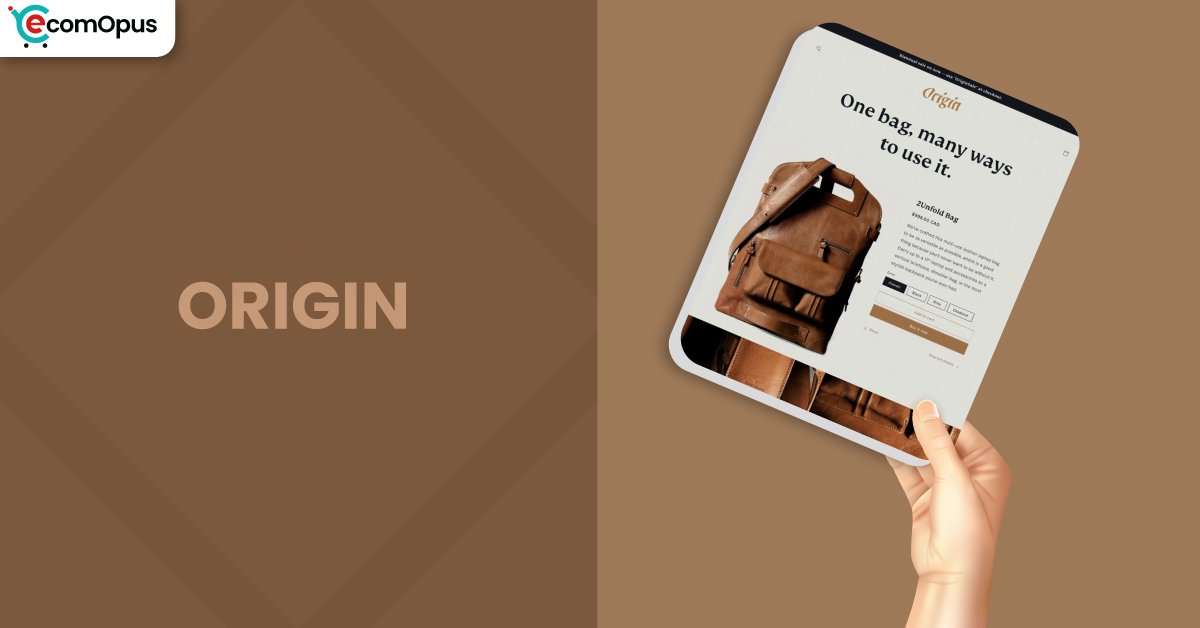
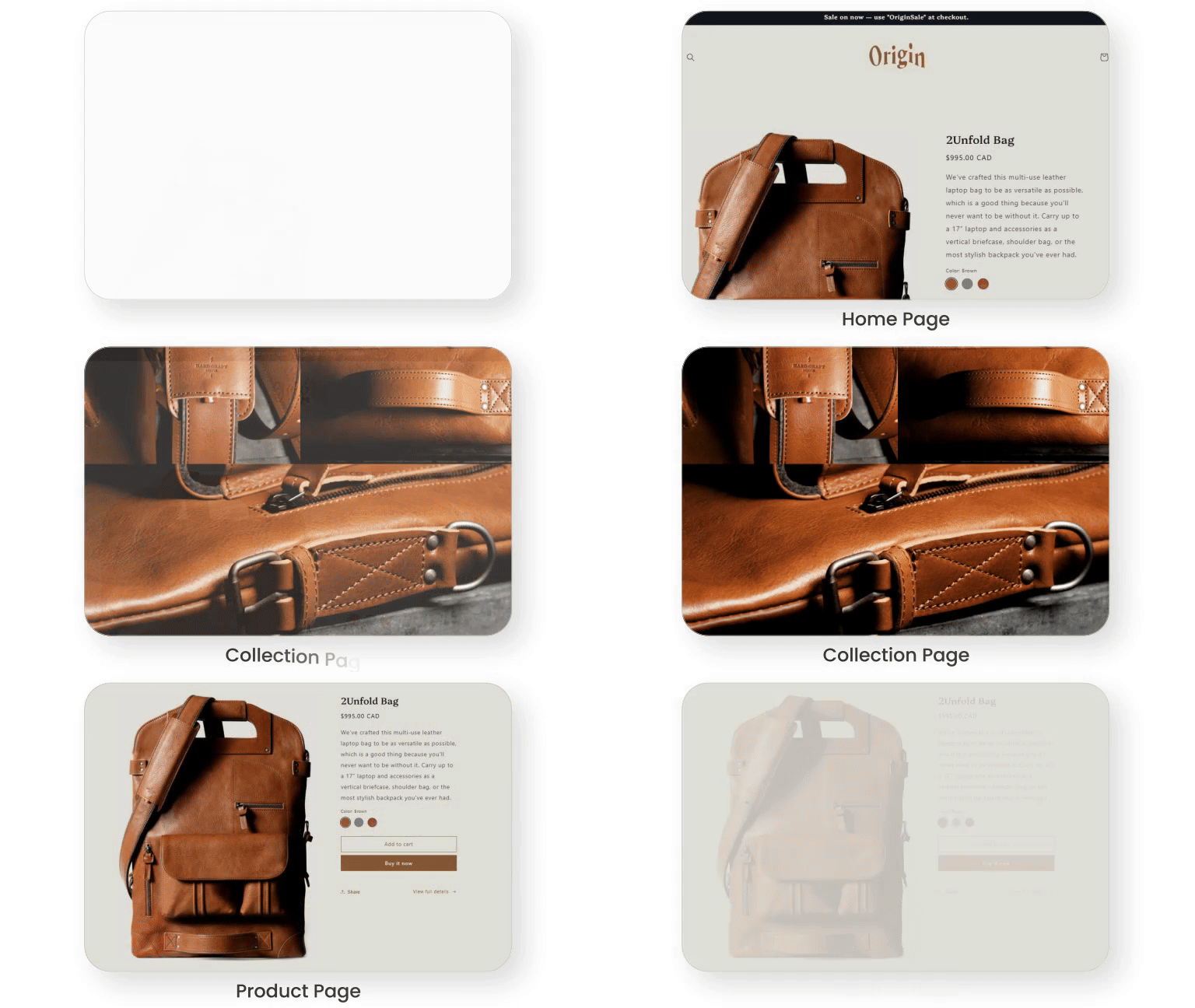
Origin is a FREE Shopify theme built for makers, boutique brands, and single-product storefronts that want a clean, neutral aesthetic. Team eComOpus found it especially strong for merchants who want a dependable layout system, fast setup, and a storefront that feels intentional without heavy design apps.
- Clean, neutral visuals for craft brands
- Built for single-product and boutiques
- Strong sections, blocks, and templates
- Mega menu support for larger catalogs
- Product tabs and slideshows included
- Easy customization without touching theme code
Introduction
Origin Shopify Theme sits in that sweet spot between simplicity and capability. It does not try to overwhelm you with flashy effects, but it still offers enough sections and layout tools to build a store that looks considered and brand-led. In our testing, the theme felt like a well-organized studio bench: everything you need is within reach, and the rest stays out of your way.
What makes Origin Shopify Theme stand out among FREE themes is its “build with structure” personality. It works best when you make a few strong design choices and repeat them consistently across homepage, collections, and product pages. To borrow one phrase that fits Origin perfectly, “The structure promotes consistency.” That consistency is exactly what helps small brands look established early.
Merchant reviews reflect a similar story. Multiple store owners praise it as a great starting point, easy to customize without code, and reliable across more than one storefront. At the same time, some feedback asks for extra polish in spacing controls, media handling, and product page interactions, which helps set expectations realistically.
Ideal For Niches With Supporting Features
Choosing a theme gets easier when you start with what you sell and how customers decide. Origin Shopify Theme naturally supports businesses that rely on storytelling, craftsmanship, or a focused product lineup. It also works well for stores that want a calm experience rather than aggressive promotion-heavy design.
Before the table, here is the key idea Team eComOpus kept seeing in tests. Origin rewards clarity more than complexity. It shines when your catalog organization is tidy and your product pages are built with a consistent template logic. If you want a theme that pushes you to keep things clean, Origin does that gently, without making the store feel sterile.
| Niches | Supporting Features | Why They Matter? |
|---|---|---|
| Crafts and handmade goods | Neutral design, product tabs, slideshows | Craft products need trust-building detail, and tabs plus media help explain materials, process, and care. |
| Boutique brands | Editorial spacing, clean hierarchy, flexible sections | Boutique stores benefit from calm browsing that lets products feel premium without loud layout tricks. |
| Single-product stores | Focused templates, featured product emphasis | Origin supports concentrated storytelling, so a hero product can stay front and center without distraction. |
| Home and decor | Image banners, galleries, structured content blocks | Visual clarity helps decor shoppers imagine items in context, especially with consistent photography. |
| Small catalogs growing into medium | Mega menu options, predictable navigation | As collections expand, the navigation foundation helps prevent “where do I click” confusion. |
Presets
Origin is a standalone Shopify theme with a single preset, so you are not choosing between multiple preset looks. Instead, the theme gives you a neutral base and expects you to shape it using sections, typography, and color schemes. This approach helps you keep brand consistency because you are not juggling different preset personalities.
For merchants, this also means the learning curve is simpler. You focus on mastering the section library, template structure, and a small set of design rules. Origin feels most “complete” when you decide your spacing rhythm early and keep it consistent across homepage and collections.
Key Features And Highlights
A feature list only matters if it changes outcomes, like faster setup, cleaner navigation, or higher product page clarity. Origin Shopify Theme focuses on practical building blocks rather than gimmicks. In testing, we found the theme especially useful when building product pages that need structured information, and when creating a homepage that feels calm but not empty.
Before the table, a quick framing note. Origin is not trying to be a promotional megaphone. It is trying to be a clean showroom where product photography and clear copy do the heavy lifting. If you want a theme that helps shoppers browse without friction, this is where Origin performs.
| Features | What It Is And Why It Matters? |
|---|---|
| Sections and blocks system | Origin uses Shopify’s modular section approach, so you can rearrange pages without rebuilding layouts. This keeps storefront updates manageable over time. |
| Product tabs | Tabs help organize details like sizing, materials, shipping, and care instructions. They reduce page length and improve scanning for cautious shoppers. |
| Slideshow support | Slideshow sections allow rotating story moments, product highlights, or seasonal banners. Used sparingly, they add motion without turning the page into noise. |
| Image banner flexibility | Merchants can stack banners to create collage-style layouts. Support replies even suggest using two stacked banners for seamless multi-image effects. |
| Mega menu configuration | Origin supports structured menus for larger catalogs through header menu settings. It is especially helpful once you add multiple collections and categories. |
| Clean featured product focus | The theme supports a strong “featured product” storytelling layout. This suits single-product and hero-product brands. |
| Color schemes and styling | Origin’s style system keeps the design consistent across sections when configured properly. It reduces the need for manual CSS tweaks. |
| Variant media controls | Settings like hiding other variants’ media can shape how product images behave. This becomes important for variant-heavy catalogs. |
| Theme documentation and support pathways | Shopify themes include documentation access and support guidance. This helps merchants troubleshoot layout or setting confusion faster. |
| App compatibility baseline | Origin supports app blocks and common Shopify integrations. Still, a lean app stack usually produces the smoothest storefront experience. |
Theme Experience!
Theme experience is what shoppers feel minute-to-minute. Team eComOpus evaluated Origin across homepage browsing, collection exploration, product page reading, and cart flow. The theme’s biggest strength is that it feels calm and predictable, which reduces the cognitive load for shoppers who are comparing options.
Before the table, here is the practical takeaway. Origin feels best when your store is built like a guided walkthrough. Each section should have a job, and each page should follow a repeatable pattern. “The layout supports logical navigation,” and that is exactly the kind of quiet advantage that improves conversion without shouting about it.
| Experience Area | What Shoppers Feel In Practice? |
|---|---|
| First impression | The storefront feels clean and confident, especially with strong hero imagery and short headlines. Shoppers can quickly understand what the store sells. |
| Collection browsing | Grids feel readable and calm, with enough spacing to avoid clutter. Product discovery improves when images share consistent aspect ratios. |
| Product page clarity | Tabs and structured blocks make it easier to digest details. This supports trust for products where materials and specs matter. |
| Mobile browsing | The layout stays stable, and content remains readable. Small interaction delays are more noticeable on mobile, so testing matters. |
| Navigation confidence | Menu structure can be expanded with mega menu settings. When categories are grouped well, browsing feels fast and organized. |
| Media storytelling | Slideshows and banners support brand storytelling. Keeping motion minimal helps the store feel premium rather than busy. |
| International selling feel | Language selection behavior can be confusing for some merchants at checkout. Shoppers generally expect the chosen site language to carry through. |
Performance, Explained!
Origin’s performance profile is an interesting mix. On mobile, real-user data shows strong paint and stability metrics, with LCP around 1.8s and CLS at 0, which is excellent for visual steadiness. The Core Web Vitals failure on mobile is driven primarily by interaction delay, with INP around 309ms, meaning taps and UI responses can feel slightly heavy under real-world conditions. This often gets worse if you add scripts for popups, chat widgets, or tracking, so merchants should keep the first screen lightweight and limit app injections that attach to cart and header behavior.
On desktop, Origin passes Core Web Vitals and feels impressively crisp. LCP is around 1.5s, INP sits near 61ms, and CLS stays close to 0.01, so the experience feels fast and stable in typical browsing. The best practices score sits at 77 on both devices, which suggests the baseline is solid but still benefits from disciplined optimization choices like compressed images, limited third-party scripts, and careful font usage.
| Performance Parameters | Mobile | Desktop | Remarks |
|---|---|---|---|
| Core Web Vitals | Failed | Passed | Mobile fails due to higher INP. Desktop passes comfortably. |
| Performance Score | 74/100 | 97/100 | Desktop is excellent. Mobile is good but interaction-sensitive. |
| First Contentful Paint | 1.0 s | 0.9 s | Content appears quickly on both devices. |
| Largest Contentful Paint | 1.8 s | 1.5 s | Strong LCP, supports fast perceived load. |
| Interaction to Next Paint | 309 ms | 61 ms | Mobile interaction delay is the main concern. |
| Cumulative Layout Shift | 0 | 0.01 | Layout stability is strong, especially on mobile. |
| Time to First Byte | 0.2 s | 0.1 s | Server response is healthy in both cases. |
| Accessibility Score | 98 | 99 | Very strong accessibility baseline. |
| Best Practices Score | 77 | 77 | Solid base, still room for optimization discipline. |
| SEO Score | 100 | 100 | Excellent baseline SEO signals. |
Pricing
Origin Shopify Theme is priced at $0, which removes upfront risk and makes it easy to test in a real build. For many merchants, the real savings come from avoiding paid theme costs and reducing reliance on layout apps. If you use Origin’s sections, tabs, and banners well, you can often skip extra tools for basic storytelling and product page structure.
The other pricing advantage is flexibility. You can install the theme, customize it privately, and publish only when you are happy with the result. This makes Origin a low-risk foundation for new Shopify stores and a safe option for merchants who want to iterate gradually.
Stores Build with Origin Shopify Theme
Looking at real stores helps validate how a theme behaves outside a demo. It shows how merchants structure menus, use product templates, and handle real catalog messiness. Since you requested that only stores with positive reviews make the list, Team eComOpus selected store names from clearly positive feedback.
Before the list, one honest note. The review pool is not massive, but the positive voices are detailed and consistent. The stores below reflect merchants who explicitly praised the theme’s usability, stability, or overall experience.
- The Homelogy
- Asphalt Armor Wear
- Dynan.se
- Shasta Shoes
Themes Similar to Origin
Comparisons help because changing themes later is expensive in time, even when themes are free. Origin sits in the calm, versatile category, so the best comparisons are themes that either match its simplicity or add promotional features that Origin does not emphasize. Team eComOpus recommends comparing based on your merchandising style, not just visuals.
Before the table, think about your store’s personality. If you want minimal and reliable, stay close to Origin. If you want built-in conversion tricks like sticky add to cart, you might look at adjacent families that prioritize product page mechanics. The table below gives you a practical shortlist.
| Shopify Theme | FREE or Paid? | Why is it Similar? |
|---|---|---|
| Dawn | FREE | A flexible baseline theme with broad compatibility and a clean default style. Great if you want simplicity and speed habits. |
| Craft | FREE | Editorial and calm with strong storytelling support. Suits makers and boutique brands that want softness and warmth. |
| Sense | FREE | Clean product presentation with a modern feel. Works well for health, beauty, and product-first stores. |
| Refresh | FREE | Balanced layout system with approachable customization. A good alternative if you want slightly more punch. |
| Horizon | FREE | Offers certain product page features like sticky add to cart. Better for merchants who want stronger purchase mechanics built in. |
Pros and Cons
Pros and cons should help you decide fit quickly. Origin has clear strengths in simplicity and brand neutrality, but it also has limitations that appear when merchants want more granular layout control or specific product page interactions. Team eComOpus pulled these points from testing and the patterns inside the merchant feedback you provided.
Before the table, a practical note. Most issues reported are not “theme-breaking,” but they can slow you down if you expect the editor to do everything. If you are comfortable with light customization or support assistance, Origin’s pros usually outweigh the trade-offs.
| Pros | Cons |
|---|---|
| Calm, neutral design fits many brands. | Limited fine control for spacing and grids. |
| Product tabs improve detail readability fast. | Some product media settings can confuse. |
| Works well for single-product storytelling. | Featured product click behavior is constrained. |
| Strong desktop performance and stability. | Mobile INP can fail with heavy scripts. |
| Mega menu support for growing catalogs. | Some merchants report thumbnail blur issues. |
Our Rating
Ratings should reflect the daily reality of building, updating, and selling. Team eComOpus scored Origin based on merchant sentiment, storefront-building usability, performance signals, and how well the theme scales from a single product to a growing catalog. Origin’s strongest trait is reliability, and its main limitation is that deeper spacing control often requires custom work.
Before the table, here is the high-level view. Origin is not trying to win with flash. It wins by being predictable, clean, and easy to maintain. If you value long-term stability over constant novelty, the ratings below will make sense.
| Parameters | Our Ratings | Summary |
|---|---|---|
| Feature Depth | 4.1/5.0 | Core ecommerce features are covered well, including tabs and slideshows. It avoids bloating the UI with gimmicks. |
| Design and Customization | 4.2/5.0 | Neutral and flexible, great for brand-building. Some merchants want more padding and grid control. |
| Performance | 4.2/5.0 | Desktop is excellent. Mobile is strong but INP can slip with heavier scripts. |
| Value for Money | 5.0/5.0 | At $0, the value is outstanding for boutiques and makers. It is a safe foundation for new stores. |
| Support and Updates | 4.1/5.0 | Review replies show consistent guidance and troubleshooting suggestions. Some fixes may require support involvement. |
| Overall | 4.3/5.0 | A dependable FREE theme with calm design and solid scalability. Best for merchants who build with structure. |
User Reviews: What Merchants Say
Origin’s reviews paint a clear picture of who enjoys the theme most. Merchants who want a straightforward, reliable foundation tend to love it, and some even describe using it across multiple stores for years with consistent success. That kind of feedback matters because it suggests the theme can handle long-term maintenance, not just a quick launch.
The most common “wish list” items revolve around deeper layout control and product page behavior. Merchants ask for things like sticky add to cart, more control over margins and padding, clickable featured product elements, and more flexibility in how media and variants behave. A few reviews also highlight specific friction points like blurry thumbnails on collection pages, mobile opacity settings not appearing, or confusion around slideshow overlay terminology.
A recurring pattern in support replies is that many issues are either configurable through settings or eligible for customization assistance. That means Origin is often capable, but not always obvious. In other words, “It offers a predictable user experience,” but it still expects you to learn its logic, especially around templates, variant media settings, and header menu configuration.
Our Verdict
Origin Shopify Theme is a strong FREE option for merchants who want a calm storefront that highlights product craftsmanship and brand story. Team eComOpus sees it as particularly effective for makers, boutiques, and single-product businesses because its templates and sections support focused storytelling without clutter. Desktop performance is excellent and the layout stays stable, which gives stores a professional feel even before deep customization.
The main performance caution is mobile interaction responsiveness. Mobile Core Web Vitals can fail because INP is higher, and that is the metric most likely to worsen when you add heavy scripts. If you keep your homepage lean, compress media, and avoid stacking multiple interactive apps, Origin’s mobile experience remains solid and consistent.
If you want a theme that stays clean, scales calmly, and does not force you into a flashy design persona, Origin is a smart foundation. Build with a few repeatable rules, keep navigation tidy, and the theme will reward you with a storefront that feels composed and trustworthy.
Who Should Not Buy Origin
Origin is not the best fit for merchants who want extreme layout freedom inside the editor, like granular control over padding, margins, and complex grid variations. If you expect to build highly bespoke layouts without touching code or seeking support help, you may feel boxed in. It is also not ideal for stores that rely on lots of script-heavy apps, especially those that attach to header, cart, and product interactions, because mobile INP can already sit near the uncomfortable zone.
If your strategy depends on aggressive promotional mechanics, like sticky purchase bars, advanced upsell widgets everywhere, or constant animation-driven sections, you may prefer a theme family that bakes those into the product page by default. Origin’s personality is calm and structured, so it will not naturally amplify “high-pressure” selling styles. For merchants who value clarity, stability, and a neutral base that can grow with disciplined choices, Origin remains one of the most dependable FREE Shopify themes available.
GET THE BEST APPS IN YOUR INBOX
Don't worry we don't spam