Couture Shopify Theme Review: Luxury Layouts for Premium Storytelling
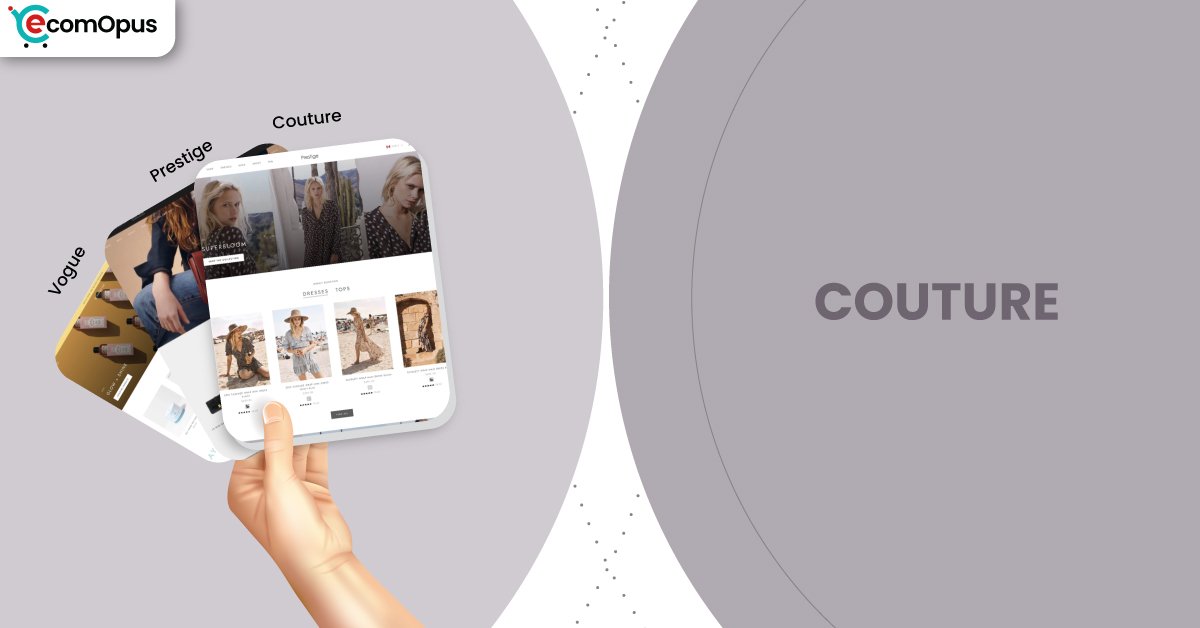
Couture is a premium preset designed to make products feel curated, not crowded. It suits brands that sell through imagery, spacing, and detail-rich storytelling rather than aggressive promotion.
- Editorial layout built for premium storytelling
- Hero visuals feel polished, not noisy
- Typography hierarchy guides eyes naturally
- Product pages reward careful content structure
- Collections look curated with strong spacing
- Mobile layout stays steady, minimizes mis-taps

Introduction
Couture is the kind of storefront preset that behaves like a well-lit boutique window. It leans heavily on whitespace, controlled typography, and image-led composition to create a “quiet luxury” shopping mood. That makes it especially attractive for fashion, jewelry, beauty, and lifestyle brands that rely on perception as much as product utility.
What Couture does well is pacing. It encourages merchants to present a strong first impression, then layer in proof, collection discovery, and product detail in a way that never feels frantic. When you populate it with consistent photography and disciplined copy, it doesn’t just look premium, it also makes the store feel easier to trust.
The constraint is that Couture is opinionated by design. If your brand needs extreme layout flexibility, or you want to heavily re-engineer page structures beyond what the editor offers, you may end up leaning on custom code. For many merchants, that trade is worth it because the preset’s default polish can replace a surprising amount of design tinkering.
Ideal For Niches With Supporting Features
Couture performs best when your catalog benefits from visual storytelling and shoppers want reassurance before buying. The sections are built to help merchants communicate value, materials, and brand identity without forcing the customer to dig through clutter. This matters because premium shopping behavior is often slower and more comparative, especially on mobile. The table below highlights niches where Couture’s structure and feature set feel naturally aligned.
| Niches | Supporting Features | Why They Matter? |
|---|---|---|
| Premium fashion and apparel | Lookbook-style imagery, refined typography, clean collections | Fashion shoppers buy into identity and fit, so presentation matters as much as pricing. Couture’s pacing makes browsing feel curated instead of transactional. |
| Jewelry and accessories | High-resolution media, structured product details, trust cues | Jewelry purchases are hesitation-prone because materials and sizing matter. Clear detail blocks plus strong imagery reduce uncertainty without adding app clutter. |
| Beauty and skincare | Ingredient storytelling sections, reusable FAQs, product badges | These buyers want clarity around benefits and usage before committing. Couture supports structured content that feels calm, not salesy. |
| Luxury home décor | Lifestyle imagery, clean grid browsing, editorial headings | Décor customers often compare finishes and sets across collections. Spacious layouts make scanning easier while keeping products feeling premium. |
| Giftable lifestyle brands | Curated collection blocks, highlight sections, quick cart flow | Gifting shoppers need fast confidence and clean decision paths. Couture helps guide choices without turning pages into promotion walls. |
| Boutique multi-collection catalogs | Strong navigation patterns, cohesive page rhythm, tidy sections | Multi-collection stores risk feeling chaotic as they scale. Couture keeps structure consistent so growth does not break the browsing experience. |
Presets
Prestige includes multiple presets that share the same foundation while offering different styling directions. This helps merchants choose the tone that matches their brand without rebuilding the entire store from scratch. The differences are most visible in spacing, visual density, and how “bold” the design feels at first glance. Use the table below to choose the preset that matches your merchandising personality.
| Preset | Aesthetic Vibe | Where It Shines | Noteable Tweaks |
|---|---|---|---|
| Couture | Editorial luxury with calm confidence | Fashion, jewelry, premium lifestyle catalogs | Strong whitespace and refined typography rhythm |
| Vogue | Statement-forward and campaign-ready | Drops, launches, trend-led collections | Bolder merchandising energy and sharper callouts |
| Allure | Minimal, soft, and gently premium | Clean brands with subtle storytelling | Balanced layouts with an understated feel |
Key Features And Highlights
Couture’s strongest features are the ones that make premium shopping feel effortless. It supports long-form brand storytelling without letting pages become heavy or messy when used with restraint. This is important because premium conversion is often built on trust signals, clarity, and visual consistency rather than constant discount messaging. The table below covers the standout elements and how they affect real customer behavior.
| Features | What It Is And Why It Matters? |
|---|---|
| Editorial homepage pacing | Couture encourages a sequence of hero, proof, curation, and discovery rather than stacking everything at once. That pacing makes premium catalogs feel intentional and easier to explore. |
| Structured product storytelling | Product pages support clean organization of materials, care, sizing, and brand notes in predictable blocks. This reduces hesitation because shoppers can understand value without hunting. |
| Collection-first merchandising | Collections are designed to feel curated through spacing and hierarchy rather than aggressive visual noise. This helps customers browse longer without decision fatigue. |
| Typography and hierarchy control | Couture’s type scale and spacing create a clear reading path across sections. When copy is concise, it elevates the brand voice instead of competing with visuals. |
| Trust cues without clutter | You can reinforce credibility through structured information placement rather than stuffing pages with badges. Premium shoppers respond better to calm reassurance than loud persuasion. |
| Polished micro-interactions | Subtle motion supports perceived quality when used sparingly and consistently. It helps the store feel modern without distracting from product focus. |
| Mobile-friendly composition | Couture keeps layouts readable and stable on mobile, which is essential for premium brands that rely on image browsing. It helps prevent mis-taps and reduces frustration during discovery. |
| Built for visual consistency | The preset rewards consistent photography and unified styling choices. When imagery is aligned, the entire store feels more expensive without extra design work. |
| Flexible section stacking | Merchants can build pages that feel like edits, collections, and stories rather than generic blocks. That makes seasonal refreshes easier without redesigning everything. |
Theme Experience!
Couture’s shopping experience is designed to feel calm, premium, and guided. It does not rush the buyer, and it avoids the “warehouse catalog” effect that can cheapen brand perception. That said, it expects merchants to respect the design discipline and avoid piling on too many third-party widgets. The table below breaks down what shoppers typically feel when the preset is set up well.
| Experience Area | What Shoppers Feel In Practice? |
|---|---|
| First impression | The store feels premium within seconds, even before scrolling far. Shoppers perceive higher product value because the layout feels curated and deliberate. |
| Collection browsing | Grids feel easy to scan because spacing reduces visual fatigue. Discovery feels smoother because the page does not overload the shopper with competing signals. |
| Product pages | Product information feels organized and trustworthy rather than scattered. Shoppers can move from curiosity to confidence without leaving the page repeatedly. |
| Brand storytelling | Content feels like part of the shopping journey instead of a separate “about” detour. This makes the store feel cohesive and increases emotional buy-in. |
| Mobile flow | Pages remain readable and stable, which reduces frustration during browsing. Shoppers are less likely to misclick because the layout does not jump around much. |
| Conversion moment | The buying step feels clean and intentional rather than pushy. Shoppers stay oriented because the design keeps focus on the product decision. |
| Post-purchase perception | The store leaves a “premium brand” aftertaste even after checkout. This supports repeat intent because customers remember the experience as polished. |
Performance, Explained!
Couture’s performance profile shows a strong desktop experience and a more variable mobile experience. On desktop, Core Web Vitals pass and interactions are very responsive, which supports smooth browsing and quick add-to-cart behavior. That matters for premium stores because any friction can break the illusion of polish.
On mobile, Core Web Vitals do not pass in this run and some interaction metrics are not available, which is a signal to test carefully across devices. In practical terms, Couture will feel best when merchants keep apps lean, compress imagery properly, and avoid stacking multiple scripts that fight for early loading priority. Premium layouts can still be fast, but they demand disciplined asset choices.
Performance is not just numbers here, it is brand perception. A fast, stable storefront feels trustworthy and premium, while a slow one feels uncertain and expensive in the wrong way.
| Performance Parameters | Mobile | Desktop | Remarks |
|---|---|---|---|
| Core Web Vitals Assessment | Failed | Passed | Mobile consistency is the main watch-out for this preset. Desktop browsing should feel stable and polished for most shoppers. |
| Largest Contentful Paint (LCP) | 2.9 s | 2.1 s | The main visual loads reasonably fast on both devices. Mobile can feel slightly delayed on slower networks with heavy imagery. |
| Interaction to Next Paint (INP) | N/A | 85 ms | Desktop interactions are crisp and conversion-friendly. Mobile reporting gaps make real-device testing more important than assumptions. |
| Cumulative Layout Shift (CLS) | 0 | 0.02 | Layout stability is excellent, especially on mobile in this run. This reduces mis-taps and protects checkout intent. |
| First Contentful Paint (FCP) | 1.8 s | 1.4 s | Shoppers see content early, which lowers bounce risk. Desktop gets to “visible and usable” faster and more reliably. |
| Time to First Byte (TTFB) | N/A | N/A | TTFB is not available in this capture. When TTFB is unclear, focus optimization on images, scripts, and app load order. |
Couture can feel genuinely premium when performance is treated as part of design. If you keep the build lean, the preset’s polish reads as confidence instead of weight.
Pricing
Couture is positioned as a premium purchase, and the cost makes the most sense when it replaces multiple design-heavy apps and reduces the need for frequent redesign work. The value is not only in the look, but also in how quickly a brand can achieve a polished storefront without hiring a designer for every refinement. That said, merchants should also budget for optional customization if they want changes beyond what the editor settings provide.
For brands that compete on perception, the pricing can be justified quickly because a premium presentation supports stronger product confidence. For brands competing primarily on price and velocity, the investment may feel unnecessary if you will strip the design down to something purely functional.
Stores Build with Couture Shopify Theme
Live store examples are useful for seeing how merchants interpret a preset with real photography, real product data, and real navigation complexity. However, public listings typically confirm the theme family rather than the exact preset selection, and Couture is a preset within a broader theme. To keep our insights credible, we do not list stores unless we can confidently verify what is being used and how it is configured. This section will be expanded as verified examples become available through reliable observation.
Themes Similar to Couture
Couture sits in the premium editorial category, so the closest alternatives tend to emphasize typography, whitespace, and image-led merchandising. These themes often overlap in audience but differ in flexibility and default tone. Choosing between them usually comes down to whether you want calm luxury, bold campaign energy, or structured scalability. The table below highlights comparable options and why they sit in the same lane.
| Shopify Theme | FREE or Paid? | Why is it Similar? |
|---|---|---|
| Broascast | Paid | Broadcast also leans into editorial merchandising and premium visual storytelling. It supports a curated feel that helps products look intentional rather than mass-listed. |
| Impulse | Paid | Impulse blends polished visuals with stronger merchandising mechanics for bigger catalogs. Like Couture, it can be styled premium when imagery and spacing stay disciplined. |
| Symmetry | Paid | Symmetry offers clean structure and strong navigation for multi-collection brands. It can deliver a luxury feel when configured with calm layouts and cohesive photography. |
| Pipeline | Paid | Pipeline favors modern minimalism and product-led storytelling with strong typography. It similarly rewards restraint and makes premium brands feel confident and contemporary. |
| Dawn | FREE | Dawn can be styled toward minimal luxury with careful customization and content discipline. It lacks Couture’s built-in editorial polish but can mimic parts of the aesthetic with work. |
Pros and Cons
Couture has clear strengths for premium brands, but it also has predictable trade-offs. The pros below focus on how it shapes perception, reduces shopping friction, and keeps catalogs feeling curated. The cons highlight where merchants can feel boxed in or performance-sensitive depending on setup. Use the table as a practical checklist rather than a verdict.
| Pros | Cons |
|---|---|
| Premium spacing elevates product perception. Shoppers browse longer because the store feels calm and curated. | Deep layout changes may require coding. Merchants expecting unlimited editor freedom can feel constrained quickly. |
| Typography hierarchy guides attention naturally. It makes long pages feel easier to read and trust. | Mobile performance can vary by setup. Extra apps and heavy media can weaken consistency on slower devices. |
| Product storytelling blocks reduce hesitation. Shoppers get value, materials, and care details without digging. | The design punishes messy imagery. Inconsistent photography will look more obvious and less flattering. |
| Collections feel curated, not warehouse-like. This supports premium brands with multiple product families. | |
| Visual polish reduces “DIY store” vibes. Brands can look established faster with fewer design experiments. |
Our Rating
Couture scores highest in design quality, brand perception, and the ability to create a premium browsing rhythm without heavy customization. It performs best for merchants who already have strong imagery and a clear brand voice, because the preset amplifies what you feed it. The main caution area is customization depth for merchants who want to reshape layouts beyond the theme editor’s intended boundaries. The table below reflects how Couture typically performs across key dimensions.
| Parameters | Our Ratings | Summary |
|---|---|---|
| Design Quality | 4.8/5.0 | Couture delivers a refined, editorial storefront that feels genuinely premium. Whitespace and hierarchy make products feel curated instead of crowded. |
| Ease Of Setup | 4.4/5.0 | The preset is straightforward if you follow a clean content plan. Deeper brand-specific layout changes can require developer confidence. |
| Feature Depth | 4.5/5.0 | Product storytelling support is strong and well-structured for premium catalogs. It favors quality presentation over an endless pile of gimmicks. |
| Conversion Support | 4.4/5.0 | Couture supports confident decisions through clarity, stability, and product detail structure. Results improve when merchants avoid clutter and use persuasion sparingly. |
| Mobile Experience | 4.3/5.0 | The layout stays stable and readable, which protects browsing comfort. Mobile speed consistency depends heavily on app load and imagery discipline. |
| Support And Updates | 4.6/5.0 | Merchant feedback for the theme family frequently highlights helpful support experiences. Updates and fixes help keep the premium experience reliable over time. |
Couture is best rated as a brand-building preset rather than a promotion-first theme. If your catalog is visual and your positioning is premium, these strengths translate into a more confident storefront.
User Reviews: What Merchants Say
Merchant feedback on the Prestige theme family consistently frames the experience as premium and polished, with strong support as a recurring highlight. Several reviewers describe the design as elegant and elevated, and they specifically mention that the layout and spacing help their stores feel refined without extensive effort. This kind of feedback matters because premium themes live or die by whether the “expensive feeling” holds up in day-to-day use.
Support quality is repeatedly called out as fast and helpful, especially when merchants run into setup issues, formatting inconsistencies, or advanced tweaks. Reviews also show that merchants appreciate guidance that helps them learn how to fix problems instead of simply receiving a patch. For many store owners, this becomes a hidden value layer because premium stores tend to accumulate complex requirements over time.
The sharper criticisms focus on customization friction and the lack of refund flexibility once purchased, which can frustrate merchants who expect plug-and-play freedom at a premium price. A few comments also point to areas where they want additional features or richer collection-page behavior, and others mention that certain adjustments feel harder than they should without touching code. The overall takeaway is clear: merchants who align with the preset’s design philosophy love the result, while merchants seeking unlimited flexibility can feel boxed in.
Our Verdict
Couture is a strong recommendation for brands that want their storefront to feel like a premium editorial environment rather than a busy catalog. It shines when your photography is consistent, your collections are curated, and your product pages have a clear story to tell. In that setup, Couture helps shoppers move from admiration to confidence without you needing to shout.
The best way to win with Couture is to treat restraint as a feature, not a limitation. Keep your app stack lean, let whitespace do its job, and build repeatable product content blocks that answer questions early. If you do that, Couture becomes a long-term brand asset rather than just a pretty template.
Who Should Buy Couture
Couture is best for merchants who care about brand perception and want a storefront that looks established from day one. It supports catalogs where the “feel” of the shopping experience is part of what customers are buying. It also suits teams that prefer a strong design foundation over endless settings. The table below outlines the buyer profiles most likely to get strong value from Couture.
| Best-Fit Buyer Profile | Why Couture Fits | What They Will Love Most | Smart Setup Move |
|---|---|---|---|
| Premium fashion brands | Editorial layout supports lookbook merchandising | Calm luxury that makes products feel curated | Build a repeatable photo style guide |
| Jewelry and accessories | Product storytelling reduces sizing hesitation | Trust-building detail blocks on product pages | Standardize materials and care sections |
| Beauty and skincare | Structure suits ingredient-led narratives | Clear value explanation without clutter | Turn FAQs into reusable product templates |
| Boutique lifestyle catalogs | Collections stay tidy as catalog grows | Curated browsing that avoids fatigue | Keep navigation tight and collection-driven |
| Brands selling high AOV items | Premium perception supports price confidence | A storefront that feels established | Use fewer promotions, stronger storytelling |
Who Should Not Buy Couture
Couture is not ideal for merchants who want a purely utilitarian storefront or who plan to run constant promotion-heavy layouts. It is also a weaker fit for businesses that rely on intense app-driven experiences, because too many scripts can dilute the calm design and introduce performance sensitivity. Another group that may struggle is merchants who expect every layout change to be achievable through simple toggles, because Couture’s polish comes with design guardrails. The table below highlights profiles that should consider alternatives.
| Not-Ideal Buyer Profile | Why It Can Be A Poor Fit | What They Will Likely Struggle With | Better Approach |
|---|---|---|---|
| Discount-first stores | Couture is built for calm premium pacing | Too many promos will clutter the layout | Choose a merchandising-heavy theme |
| App-stacked storefronts | Scripts can compete and add friction | Mobile consistency can degrade quickly | Reduce apps, focus on native features |
| Extreme custom layout needs | Design guardrails limit editor freedom | You may need code for deeper changes | Start with a flexible framework theme |
| Low-quality photography catalogs | The preset exposes visual inconsistency | Products may look less premium than intended | Improve imagery before upgrading theme |
| Merchants wanting instant flexibility | Premium polish comes with structure | Expectation gap around “easy changes” | Consider simpler themes or agency builds |
GET THE BEST APPS IN YOUR INBOX
Don't worry we don't spam