Sense Shopify Theme Review: Bright Design That Turns Browsers Into Buyers
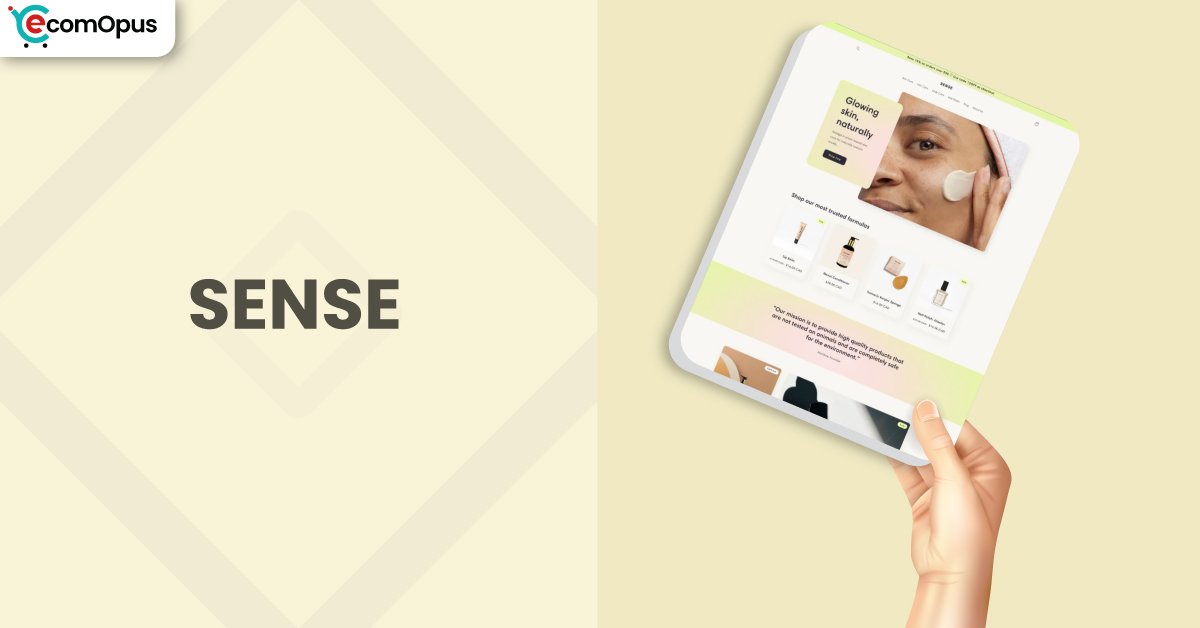
Sense is a FREE Shopify theme built for brands that want a fresh, energetic storefront without paying for a premium template. It leans into soft gradients, curved elements, and product-first layouts that make details easier to understand.
- Gradient-led design with calm, modern energy
- Strong product detail layouts for trust
- Clean sections that stay easy to edit
- Built to suit visual, benefit-led products
- Mobile layout rewards disciplined media use
- FREE Shopify theme with low risk

Introduction
Sense Shopify Theme is one of those “looks simple, sells smart” templates. Team eComOpus sees it work best when you’re selling products that need explanation, like beauty, wellness, personal care, or any catalog where ingredient lists, benefits, and how-to content influence conversion. It supports a seamless browsing experience.
Merchants often describe the theme as “easy to learn” and “very professional,” but the comments also show a clear pattern: Sense rewards clean configuration and punishes rushed customization. If you treat the theme editor like a brand system, not a paint bucket, you can get a storefront that feels premium without paying a cent.
Ideal For Niches With Supporting Features
Sense Shopify Theme tends to shine when the product needs context and the brand needs a clean visual rhythm. We mapped the niches below based on how the theme handles product storytelling, structured sections, and confidence-building layouts. The goal is not to box you into an industry, but to show where the theme naturally makes merchandising easier. Use this table as a practical shortcut, then match it to how your customers browse and compare.
| Niches | Supporting Features | Why They Matter? |
|---|---|---|
| Beauty and skincare | Product detail blocks, clean galleries | Shoppers want proof and clarity before purchase. Structured details reduce hesitation and make routine-based bundles easier to understand. |
| Wellness and supplements | Collapsible rows, trust-oriented layout | Wellness buyers read more and doubt more. A clean hierarchy helps them scan benefits quickly and still find deeper information. |
| Home fragrance and self-care | Soft gradients, calm visual spacing | This niche sells mood and lifestyle. The design supports a premium feel while keeping navigation predictable for repeat customers. |
| Boutique food and beverages | Ingredient clarity, tidy product templates | Food buyers check ingredients, sizes, and usage notes. Sense helps keep those details visible without turning the page into a wall of text. |
| DTC personal care brands | Strong branding sections, consistent layout | DTC stores win on story and consistency. The theme’s controlled design helps your pages look unified even as the catalog grows. |
Presets
Sense is a standalone Shopify theme with no preset variations. As a FREE Shopify theme, it gives you one core design system that you customize through sections, color schemes, and content structure without any upfront investment.
Key Features And Highlights
Sense Shopify Theme is not about stuffing a store with gimmicks. It’s about guiding shoppers with clarity, spacing, and well-placed detail blocks that make products feel understandable and credible. The features below are the ones that consistently influence day-to-day selling, especially for stores that rely on benefits, routines, and education to convert. We’re keeping this list practical, meaning each item reflects what you can actually use without adding extra apps or custom development.
| Features | What It Is And Why It Matters? |
|---|---|
| Soft gradient styling | The theme uses gentle gradients and curved shapes as part of its visual language. This matters because it creates brand warmth without crowding product information. |
| Product-first layout system | Product pages prioritize structured content blocks like descriptions, variants, and collapsible details. That structure helps shoppers compare options without losing the thread of what they’re buying. |
| Color schemes approach | Sense relies on color schemes to control backgrounds, text, and section contrast. It keeps branding consistent when used carefully, but it may feel restrictive for highly customized designs. |
| Collapsible information rows | Collapsible rows let you tuck long info like ingredients, sizing, or FAQs into neat sections. This reduces scroll fatigue while still giving detail-driven shoppers what they came for. |
| Media-forward product gallery | The product media area is designed to keep images and videos central. It improves confidence when your photos are strong and your variants are organized thoughtfully. |
| Section-based homepage building | The homepage is built by stacking and arranging sections in a predictable order. This speeds up iteration because you can swap messaging without redesigning the entire layout. |
| Newsletter and email capture areas | Built-in signup sections help you capture leads without needing a heavy popup tool. It’s especially useful for launches, bundles, and routine-driven replenishment flows. |
| Localization-ready storefront | The theme supports key storefront elements that help international selling feel smoother. This matters when your catalog targets multiple regions and you want fewer friction points. |
| Trust-focused content blocks | Sense encourages educational content like routines, benefits, and brand explanations. That structure improves conversion for products that are not instant-understood at first glance. |
| Shopify-native editor compatibility | Most design changes are handled inside the Shopify theme editor. This reduces dependency on extra apps, which helps stability and keeps storefront behavior more predictable. |
Theme Experience!
Theme experience is what shoppers feel while browsing, not what the theme claims on a demo page. Team eComOpus reviewed Sense Shopify Theme from the perspective of a first-time visitor, a comparison shopper, and a returning customer who already trusts the brand. Sense is built to feel bright and calm at the same time, which is a useful combination for products that need reassurance. The table below breaks down how that experience typically lands in real browsing sessions.
| Experience Area | What Shoppers Feel In Practice? |
|---|---|
| First impression | The storefront feels clean, modern, and intentionally styled. Shoppers quickly understand that products, not clutter, are the focus. |
| Product discovery | Category browsing feels steady because spacing and typography stay consistent. Shoppers can scan benefits and imagery without being pulled into distractions. |
| Mobile navigation | Navigation stays simple and familiar, which reduces friction on smaller screens. The experience improves further when menus are kept short and clearly labeled. |
| Product page confidence | Details feel organized, not scattered, which helps buyers trust what they’re reading. When you use collapsible rows well, shoppers feel guided rather than overwhelmed. |
| Content readability | Text and section spacing are designed to stay readable across devices. This supports longer sessions, especially for brands that explain routines or ingredients. |
| Checkout transition | The path from product to cart feels predictable when the store is kept lean. Shoppers are less likely to hesitate when pages feel stable and consistent. |
| Brand mood | The visual system creates an uplifting, fresh tone without shouting. This helps wellness and lifestyle brands feel premium even with a FREE Shopify theme. |
Performance, Explained!
Sense Shopify Theme shows a mixed but very actionable performance profile, and that’s the honest truth most merchants need. On mobile, Core Web Vitals fail primarily due to slower interaction responsiveness, while paint and layout stability look strong. Desktop performance passes Core Web Vitals with fast interaction, which usually means the theme has solid structural efficiency and is not weighed down by default bloat.
The takeaway is simple: Sense can feel fast, but your app stack and media discipline will decide whether it stays fast. Several merchants also connect performance drops to updates or storefront changes, which is usually a sign that custom scripts, third-party widgets, or heavy visual sections are doing the damage, not the theme’s base layout. It gives stores a polished, professional look.
| Performance Parameters | Mobile | Desktop | Remarks |
|---|---|---|---|
| Performance Score | 78/100 | 96/100 | Desktop browsing feels quick and responsive during real navigation. Mobile remains solid, but tap-to-response timing can soften when pages are feature-heavy. |
| First Contentful Paint (FCP) | 1.0s | 0.9 s | Content appears quickly, so shoppers are not staring at a blank screen. This supports confidence during the first few seconds of the visit. |
| Largest Contentful Paint (LCP) | 1.7s | 1.5s | Main content loads within healthy ranges for most storefronts. This helps products and hero messaging show up before impatience kicks in. |
| Cumulative Layout Shift (CLS) | 0.00 | 0.02 | Layout stability is strong, which keeps the page from jumping mid-load. Stable pages reduce misclicks and improve perceived quality. |
| Interaction to Next Paint | 320 ms | 66 ms | Desktop interactions feel immediate and “snappy” during browsing. Mobile interaction can drift into slower territory if apps inject heavy scripts or complex widgets. |
| Time to First Byte | 0.2 s | 0.1 s | Server response is fast, which gives the theme a strong base to work from. This means most speed issues will come from storefront additions, not hosting delay. |
Merchants who keep Sense Shopify Theme lean tend to get a smoother experience, especially when they optimize hero images and avoid stacking multiple sliders or popups on the homepage. If you’re aiming for better mobile responsiveness, focus on reducing third-party scripts, compressing large images, and using fewer always-on widgets. Sense rewards stores that treat the homepage like a guided entry point, not a billboard with ten competing modules.
Pricing
Sense Shopify Theme costs $0, and that matters more than people admit. With a FREE Shopify theme, you can put budget into product photography, copy, and a small number of high-impact apps instead of paying upfront for a template. The real value shows up when the theme’s built-in structure reduces your need for extra add-ons like basic page builders or heavy layout plugins.
That said, free does not mean friction-free. You still “pay” with time if you over-customize or if you rely on custom code that updates won’t carry cleanly. For most new stores, Sense Shopify Theme offers the best kind of pricing: no sunk cost, fast experimentation, and the option to upgrade later only if your merchandising strategy genuinely outgrows the design system.
Stores Build with Sense Shopify Theme
Seeing live stores helps you understand whether a theme holds up outside a controlled demo. Sense Shopify Theme often shows up in brands that prioritize clean visuals, readable product information, and an uplifting design tone. The stores below were selected from merchants who shared positive experiences and clearly enjoy operating the theme. Use the names as inspiration for layout ideas, not as a blueprint to copy.
- MyMomBox
- LifeSong Pets
- West Panda Slimes
- Natural y Mágica
- Flourished Sensations
- Mountaintop Botanicals Skincare, LLC
- Shop On In
- Brötli
Themes Similar to Sense
Sense Shopify Theme sits in a specific lane: bright, clean, detail-friendly, and designed to guide shoppers gently rather than overwhelm them. Comparing it to nearby themes helps you see whether you want more minimalism, more editorial polish, or more merchandising muscle. The list below mixes FREE and paid options because the real question is not cost, it’s fit. Use these comparisons to understand which themes support your browsing patterns, product density, and branding style.
| Shopify Theme | FREE or Paid? | Why is it Similar? |
|---|---|---|
| Dawn | FREE | Dawn is a flexible baseline with broad compatibility and dependable layout logic. It’s a common alternative if you want a simpler design language with more neutral styling. |
| Refresh | FREE | Refresh leans into bold headings and strong contrast while staying structured. It’s a good match if you want a more energetic look with less gradient softness. |
| Craft | FREE | Craft focuses on calm presentation and clean storytelling-friendly sections. It overlaps with Sense when brands want credibility and clarity, just with a more muted aesthetic. |
| Prestige | Paid | Prestige delivers premium editorial polish and stronger luxury presentation tools. It’s similar when you want guided storytelling, but with more advanced merchandising control. |
| Impact | Paid | Impact uses modern styling with bold visuals and strong brand presence. It’s a close cousin when you want a more punchy, campaign-ready feel at scale. |
Pros and Cons
No theme fits every store, so we treat this section like a decision tool, not a sales pitch. The pros reflect what merchants consistently enjoy in daily operation, especially around product presentation and clean branding. The cons are framed as practical considerations, because most issues are manageable when you set expectations correctly. Read this like a pre-launch checklist: if the trade-offs feel acceptable, Sense Shopify Theme is likely a good match for your store.
| Pros | Cons |
|---|---|
| Bright, modern styling makes products feel premium. Clear spacing helps shoppers focus and reduces decision fatigue. | Color scheme workflow can confuse first-time editors. A small setup mistake can make sections look inconsistent quickly. |
| Product pages support structured information without clutter. This improves trust for ingredients, benefits, routines, and detailed specs. | Some updates can feel disruptive for custom code. You may need manual rework if you heavily modified theme files. |
| Clean layout keeps navigation predictable across pages. That consistency improves browsing confidence on both desktop and mobile. | Mobile banners may need extra image discipline. Large hero media can reduce interaction responsiveness if not optimized. |
| Sections are easy to rearrange and iterate. Merchandising changes feel quicker once your content system is defined. | |
| FREE pricing lowers risk for new brands. You can launch, test, and refine without sunk theme costs. |
Our Rating
Ratings matter only when they reflect real store outcomes, not aesthetic preference. Team eComOpus scores Shopify themes based on how they behave under real content: product pages, collections, navigation, mobile usability, and the effort required to maintain consistency as the store grows. We also account for how much the theme helps you avoid app overload, because that affects both performance and long-term operating stress. Use these scores as a directional guide, then compare them to your catalog size and the complexity of your marketing stack.
| Parameters | Our Ratings | Summary |
|---|---|---|
| Feature Depth | 4.2/5.0 | Sense covers core selling needs with strong product detail structure and flexible sections. It stays focused, so advanced merchandising extras may still require selective apps. |
| Design and Customization | 4.4/5.0 | The design system feels bright, modern, and brand-friendly when you follow its rules. Customization works best through consistent color schemes rather than constant one-off overrides. |
| Performance | 4.1/5.0 | Desktop performance is strong and gives you comfortable headroom for content expansion. Mobile interaction is the area to protect by keeping scripts lean and media optimized. |
| Value for Money | 5.0/5.0 | At $0, the value is obvious, especially for new brands building their first serious storefront. The biggest win is being able to invest in assets and conversion tools instead of theme fees. |
| Support and Updates | 4.0/5.0 | Merchant feedback shows support often points toward practical troubleshooting and setup guidance. Updates can require care if you rely on custom code, so disciplined build habits matter. |
| Overall | 4.4/5.0 | Sense Shopify Theme is a strong FREE option for benefit-led, visually clean brands. It performs best when you build with intent and avoid turning the homepage into an app showroom. |
User Reviews: What Merchants Say
Merchant feedback around Sense Shopify Theme is a blend of genuine appreciation and very specific pain points. Many users describe the theme as a strong starting point and praise the overall look, with comments like “a huge fan of this theme” and “works perfectly for me.” What merchants do not complain about, even when they are annoyed, is whether the theme looks professional, because it usually does.
The biggest friction shows up around customization systems and updates. Several merchants get stuck on color schemes and settings behavior, while others mention bugs that feel serious in the moment, like inventory messaging showing the wrong status or a country selector dropdown refusing to close. The pattern here is not random; it’s configuration sensitivity, where one mis-setting or conflict creates a very visible issue.
Another repeated theme is the desire for separate mobile and desktop banner control. Merchants want different images for different screens, largely because hero images that look perfect on desktop can feel oversized on mobile and can drag down performance. In short, Sense Shopify Theme is loved for how it looks, and challenged for how carefully it must be operated when you push customization hard.
Our Verdict
Sense Shopify Theme is a smart FREE choice for brands that sell through clarity, benefits, and visual calm rather than aggressive promotions. It’s especially effective for beauty, wellness, and personal care stores where product education and trust-building do most of the conversion work.
Where Sense wins is structure: product pages can carry detail without feeling messy, and the design language makes a new store look intentional quickly. The performance baseline is strong on desktop, while mobile interaction is the metric to protect by staying disciplined with apps, popups, and heavy media.
If your brand can commit to a consistent color system and clean content hierarchy, Sense Shopify Theme is easy to recommend. Build your core pages first, test on real phones, and treat “simple” as a strategy, not a limitation.
Who Should Not Buy Sense
Sense Shopify Theme is not the best fit if your brand needs wild layout experimentation or frequent custom-coded changes that you expect to survive updates without manual effort. Stores that rely on complex merchandising widgets, heavy animation, or a large stack of app-injected scripts may struggle to keep mobile interaction feeling crisp.
It’s also a poor match if your product story depends on radically different desktop and mobile hero designs, because merchants repeatedly ask for separate banner controls. If you need that level of device-specific art direction, you may be happier with a paid theme built for deeper layout flexibility.
GET THE BEST APPS IN YOUR INBOX
Don't worry we don't spam